
Which Pillow Is Right for Me?
There are many varieties of pillow, and the right choice influences not just comfort but the quality of your sleep. Do you sleep on your side, back or front? What shape suits you? And what is your pillow actually made of?

1Matching Your Pillow to Your Sleep Position
Your sleep position dictates how a traditional pillow can be used to provide the right support.
Sleeping on your back
When lying on your back, a pillow should support the natural curvature of the cervical spine, with adequate support under the head, neck and shoulders. The height of the pillow should be lower than in the side position. Placing a pillow or two beneath the knees further alleviates back strain, and is the gentlest position for the back.
Sleeping on your side
When lying on your side, the pillow should support the head and neck so the spine maintains a straight, natural horizontal line. Weight should be evenly distributed so as not to create unnatural bending or pressure. Some people prefer placing a small pillow or rolled towel under their waist while side lying for additional support.
Sleeping on your stomach
If sleeping on your stomach is preferred, the pillow should be relatively flat — or your head should rest directly on the mattress — so the head and neck are not turned unnaturally to either side. In this position it is often best to place another flat pillow under the stomach to help the spine keep its natural alignment.
2Types of Pillow and How to Use Them
Using a traditional pillow either between the knees (side sleeping) or below the knees (back sleeping) is important for alleviating strain on the lower back.
For sleeping on the side
Bending the knees and placing a pillow between them prevents the knees coming together and keeps the spine neutral. Without support between the legs, the upper leg rotates downward, pulling the pelvis and distorting the natural line of the spine — a useful tip for anyone who gets pelvic pain, and particularly helpful during pregnancy. A firm pillow works better than a soft one here, because it acts somewhat like a kickstand to keep the upper leg from rotating over the lower leg.
For sleeping on the back
Placing a pillow underneath the back of the knees reduces load on the lower back. Some people prefer two pillows to elevate the knees higher. With two or more pillows underneath the knees, the lumbar spine flattens, putting less force on the pain-sensitive facet joints. This is the best overall position for letting the back rest comfortably, and many people find it is the only way they can sleep during a severe bout of back pain or while recovering from spine surgery.
Body pillows
A pillow as long as the body serves several functions for side sleepers — the top portion supports the head and neck while the bottom supports the knees and legs. Some people find this more comfortable than separate pillows. Pregnant women in particular may find a body pillow that supports the abdomen helps them rest comfortably. Avoid throwing your top leg over the body pillow while side sleeping, as this places twisting force on the lower thoracic and lumbar spine.
Lower back support pillows
A lumbar support pillow supports the inward curve of the lower spine. Sitting for extended periods without lower back support creates muscle tension and pain in the lower back and legs, including sciatica. Used in a seated position, it fills the natural gap between the lower spine and the chair. It is also helpful in the car — when the lumbar curve is supported, the downward forces of gravity and driving are absorbed much like a coiled spring, rather than transmitted through a slouched spine.
3Pillow Shapes and Sizes
Contour pillows offer support to your neck without raising your head. If you find bunching a pillow under your neck adds comfort, this may be what you are looking for. Contour pillows tend to be comfortable across a diverse range of sleeping positions and are not limited to side sleeping. They often have a different height on each side, so you can turn the pillow as your sleep position changes, or when you change beds on holiday.
4Getting the Loft Height Right
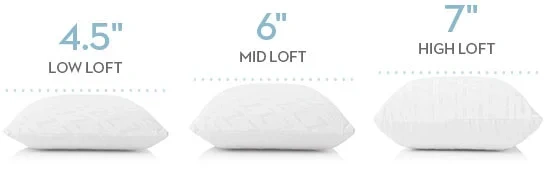
The loft height of a pillow is determined not only by your sleeping position but also by your body size. Wide shoulders generally need a higher loft pillow; petite shoulders suit a lower loft. The aim is to keep the neck in line with the back whether you are on your back or side — a neutral position, rather than bending your neck at an acute angle.
On a softer mattress your shoulders sink in further as a side sleeper, so you need less pillow height to stay neutral. On a firmer mattress you will not sink in as far, and will need more height.
Stomach sleepers need lower loft again, to avoid a large amount of neck rotation. Sometimes no pillow at all is the answer. A useful trick for stomach sleepers is to tuck a pillow diagonally under the neck and arm, on the side you face as you sleep — this decreases rotation through the neck. You will look like you are almost cuddling the pillow lengthways if it is positioned correctly.
If you wake with a sore neck or body, have restless sleeps, or regularly get headaches, changing your pillow may well be the answer. Pillows are a very individual thing, so it is hard to recommend one that suits everyone — but applying these pointers to your next pillow purchase may make a very positive change.
5What Is Your Pillow Actually Made Of?
Your pillow is the closest thing to your face for a good portion of your life. It also supports your neck and head. Choosing a natural organic pillow that lets you breathe fresh air and cradles your neck properly allows you to genuinely rest.
Conventional pillows can contain what has been described as a “toxic soup” of chemicals such as formaldehyde, PCBs, PBDEs and boric acid, which have been associated with symptoms including headache, nausea, fatigue and sore throat, as well as allergic reactions and respiratory irritation. If you want to read further on this, we recommend the book Toxic Bedrooms by Walter Bader.
What we recommend
We recommend organic natural pillows by Innature:
- INNATURE Organic Cotton & Wool pillows
- INNATURE Organic Buckwheat Husk pillows
- INNATURE Organic Latex pillows
Please avoid memory foam, which is generally the worst option. Also note that most bamboo pillows — which many people assume are a natural choice — are usually a memory foam pillow wrapped in a bamboo cover. That is clever marketing rather than a bamboo pillow. If you have one, it is worth checking, as it may be contributing to your problems.
Which Pillow Is Right for Me? Common Questions
How many pillows should a side sleeper use?
Usually two small to medium pillows, so the gap between your shoulder and head is properly filled and your spine stays in a straight line. Back sleepers generally need just one, and a lower loft.
How do I know if my pillow is too low?
A reliable sign is sleeping with an arm tucked under your pillow — your body is compensating for missing height. Waking with pins and needles or a dead arm is another, caused by compression at the front of the shoulder.
Are bamboo or memory foam pillows a good choice?
We would avoid memory foam. Most pillows marketed as bamboo are memory foam wrapped in a bamboo cover rather than genuinely bamboo. Natural organic options like cotton and wool, buckwheat husk or natural latex are a better choice.
How often should I replace my pillow?
When it loses its firmness and no longer supports your neck — which for most pillows happens well before people replace them. If you are waking with neck pain or headaches, your pillow is a good first suspect.
Still waking with neck pain after changing your pillow?
If the right pillow has not fixed it, there may be joint restriction or muscle tension that needs treating directly.