
The Correct Sleeping Position for Back and Neck Pain
We rarely think about our spines while lying in bed — but sleep posture helps determine whether we wake up in pain. Here are the positions that protect your back, and the ones quietly causing you trouble.
1Why Stomach Sleeping Is the Worst Position
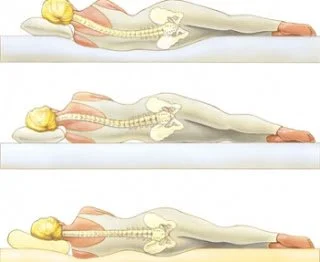
Sleeping on your stomach is the worst position for your spine. It places the most pressure on your spine’s muscles and joints because it flattens the natural curve of your spine. It also forces you to turn your neck to one side for hours, which causes neck and upper back pain.
Below are the recommended sleeping positions to help ease pain and prevent it returning. For pillow advice specifically, see our guide on which pillow is right for you.
2Correct Sleeping Position: For the Lower Back
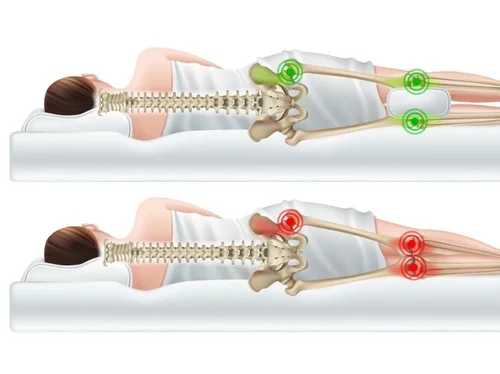
Tucking a pillow between the knees helps keep the spine in neutral alignment — whether you sleep on your side or on your back.
Avoid sleeping on your side with one knee dropped in front of the other. This twists the spine and pelvis for long periods while you sleep, and is one of the most common causes of morning low back and pelvic pain.
3Mattress Firmness and Your Body Shape
Your body type dictates the type of support you need. If your hips are wider than your waist, a softer mattress can accommodate the width of your pelvis and allow your spine to remain neutral. If your hips and waist are in a relatively straight line, a more rigid surface offers better support.
It is not just the lower body that matters. Twisting also comes from the upper back and shoulders. Without the proper pillow support for your head — at the correct height to match your shoulder width — you will turn your upper body and end up sleeping on your entire shoulder blade.
Getting the right pillow height (for side lying, normally two pillows) helps stack your shoulders and stops you rolling backwards onto your shoulder blade. Even if you are well supported with a pillow through the knees and ankles, rolling backwards onto your shoulder blade will continue to twist down through the back and upset the lower back and pelvis.
4Correct Sleeping Position: For the Neck

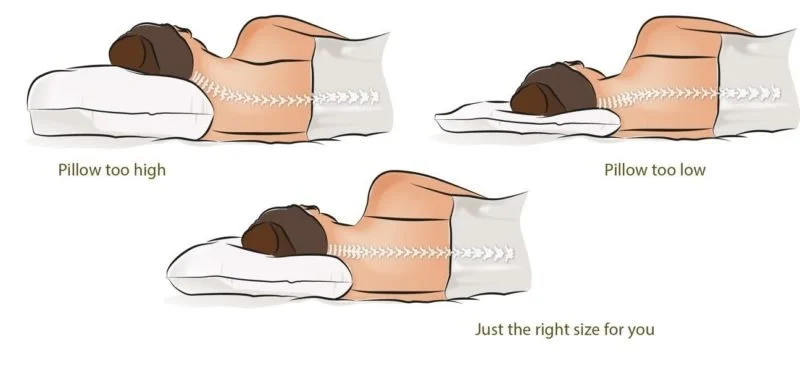
For side sleepers, if your pillow is too low you can crush the brachial plexus at the front of the shoulder when you place your arm in front of your body as you sleep. The brachial plexus is the bundle of nerves that comes out of the neck and travels down into the arms, supplying the arm muscles. When it is compressed, you can wake with pins and needles or a dead arm and hand.
To prevent this, do two things
- Make sure your pillow is not too low. When you lie on your side, your shoulders collapse somewhat as your body weight sinks into the mattress. Your pillow should fill the remaining space between the mattress and your head, providing enough support to cradle its weight without tilting your neck in any direction. Look for a pillow that keeps your spine in straight alignment — two small to medium pillows if you are a side sleeper, one pillow if you sleep on your back.
- Place a pillow in front of your body and drape your arm over it. This keeps the front of the shoulder open, preventing irritation to the brachial plexus.
Common Questions About Sleep Posture
What is the worst sleeping position for back pain?
Stomach sleeping. It flattens the natural curve of your spine, loads the joints and muscles, and forces your neck into rotation for hours at a time — a common cause of both neck and upper back pain.
Why should I put a pillow between my knees?
Without support between the legs, the upper leg rotates downward and pulls the pelvis with it, twisting the natural line of the spine. A firm pillow between the knees acts like a kickstand and keeps everything neutral. It is particularly helpful during pregnancy and for anyone with pelvic pain.
Why do I wake up with a dead arm or pins and needles?
Usually a pillow that is too low for side sleeping, which compresses the brachial plexus at the front of the shoulder. Raising your pillow height and draping your arm over a pillow in front of you generally resolves it.
Waking up sore most mornings?
If changing your position and pillow has not fixed it, an osteopathic assessment can identify what is actually restricted.