
Auckland · Glenfield & Orewa
Told it is IBS, handed a low FODMAP sheet, and left to work the rest out yourself. That is where most people are when they get here — and IBS is a description of your symptoms, not an explanation of them. Our IBS Auckland team investigates what is actually driving it.
Beyond the low FODMAP sheet
IBS is a diagnosis made by ruling out everything else. It tells you that nothing sinister is happening, which matters, but it does not tell you why your stomach is distended by four in the afternoon or why the food list keeps shrinking.
A low FODMAP diet helps a lot of people, and it is a reasonable first step. It is also a symptom-management tool rather than a treatment, and living on it long term narrows the diet in ways that are not good for the gut over time.
What we do instead is look for what is driving it: small intestinal bacterial overgrowth, an imbalance in gut bacteria, a gut that has never settled since a bout of food poisoning, genuine food intolerance, or the gut-brain loop that turns a stressful month into three months of symptoms. Testing tells us which, and the plan follows from that.
What we investigate
What people actually arrive with, and what usually turns out to be behind it.
The commonest picture: flat in the morning, visibly bloated by evening. Frequently small intestinal bacterial overgrowth, and breath testing settles it either way.
Bacteria growing where they should not be. Tested by breath test, typed as hydrogen or methane, and treated differently depending on which.
A gut that has never been the same since food poisoning or a stomach bug overseas. Common, under-recognised and worth investigating properly.
Including the constipation-predominant pattern that does not respond to simply adding fibre. Gentle hands-on work often helps alongside the dietary side.
When the list of safe foods keeps getting shorter, the answer is usually to widen it carefully rather than cut further. Testing helps target that.
Burning, fullness after small meals and reflux that has not settled on medication. Often connected to what is happening lower down.
Get checked first
IBS is a diagnosis of exclusion, which means the serious things need excluding first. If you have not had your symptoms assessed by a GP, do that before booking with us — we investigate function, not disease, and we are not a substitute for that step.
See your GP promptly for blood in your stool, unexplained weight loss, a persistent change in bowel habit after the age of fifty, waking at night with pain or diarrhoea, a family history of bowel cancer or inflammatory bowel disease, or anaemia. These need medical investigation, not a stool test.

The testing
Chosen to fit your symptoms. Most people need one or two of these, not all of them.
A home breath test measuring hydrogen and methane after a test drink. The single most useful test when bloating and distension are the main complaint.
Maps the bacteria actually present, along with yeast, parasites, inflammatory markers and how well you are digesting and absorbing food.
Worth confirming before removing gluten, because testing for coeliac disease only works while you are still eating it.
Structured reintroduction guided by your symptom record, which is more reliable than any single panel, with testing where it genuinely adds something.
Iron, B12, folate, vitamin D and zinc — the ones a gut that is not absorbing well runs low on first.
A urine test showing fermentation patterns and bacterial by-products, useful when the picture is not clear from the stool test alone.
Who is involved
Led by testing and nutrition, with hands-on treatment where it adds something.
The investigation: a long first consultation, targeted stool or breath testing, and a written protocol built on what comes back rather than a generic gut programme.
Treatment protocols for SIBO and dysbiosis, then the part most people never get to — widening the diet back out safely once symptoms settle, instead of living on twelve foods.
Has a genuine evidence base for IBS symptoms, particularly abdominal pain and the stress side of the gut-brain loop. Useful when symptoms flare with pressure.
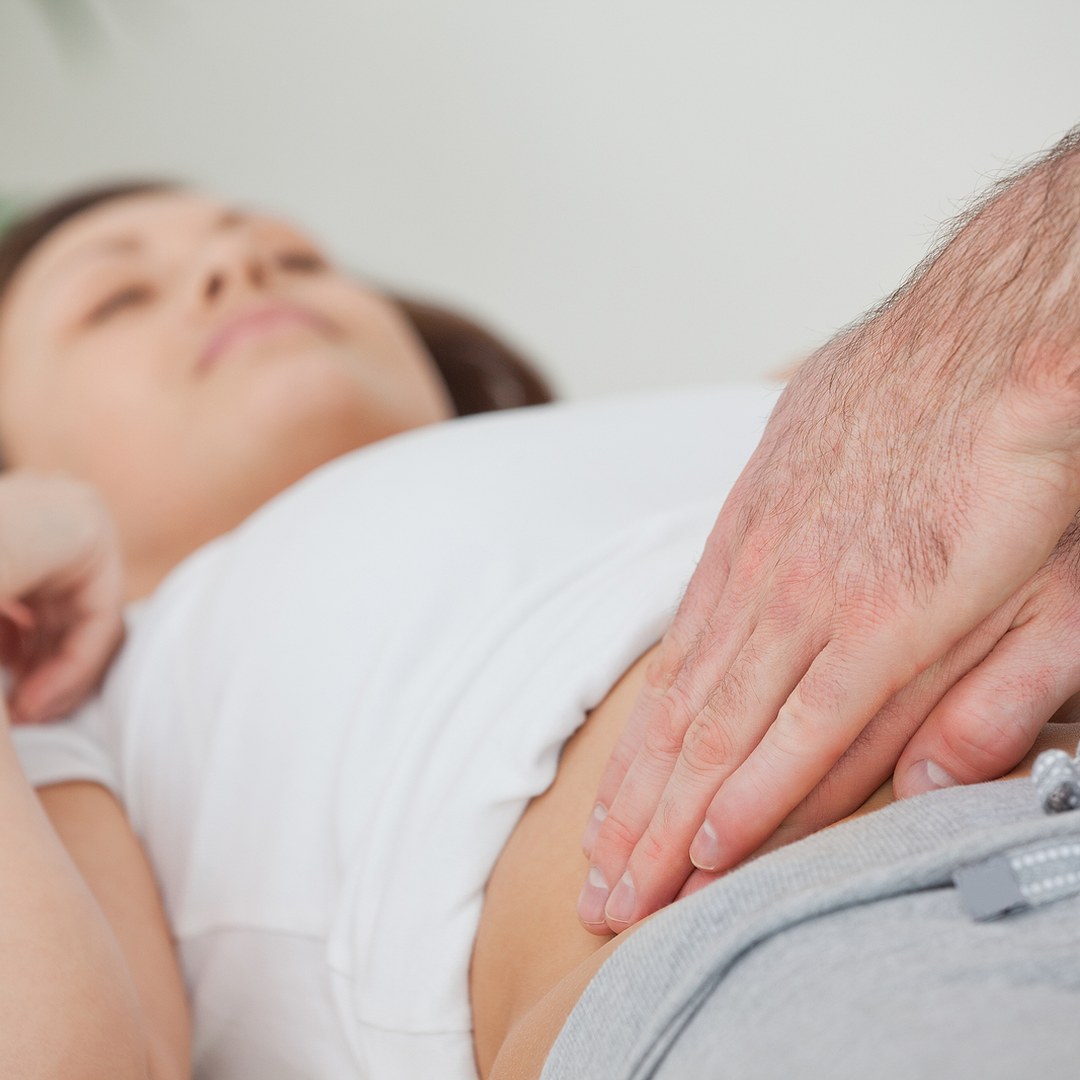
Gentle hands-on work through the abdomen, diaphragm and lower back. Most useful for constipation, trapped wind and the discomfort of long-term bloating.
How it runs
Four stages. The first appointment is long, because the history is where most of the answers are.
When it started, what was happening then, what makes it better and worse, what you have already cut out, and what a typical day of eating looks like now.
Usually a breath test, a stool test or both, quoted before anything is ordered. You decide what is worth running.
Whatever the results point to — antimicrobial or dietary protocols for overgrowth, gut repair for inflammation — over roughly six to twelve weeks.
The stage people most often miss. Foods reintroduced deliberately and in order, so the diet ends up broader than when you started rather than narrower.
Between appointments
Keep a simple food and symptom record, with the timing. Reactions that feel random usually have a pattern, and the pattern is much easier to see written down than remembered a fortnight later.
If gluten is on your suspect list, our guide to eating gluten-free lists naturally gluten-free foods and hidden sources of gluten. Talk to us or your GP about coeliac testing before you cut gluten out, because the test needs gluten in your diet.
Eat sitting down and slowly. It sounds like nothing. Eating fast, standing up, between meetings, is a genuinely common contributor to bloating and reflux, and it is free to change.
Do not cut more food out on your own while we are investigating. A narrower diet makes the testing harder to interpret and the gut bacteria less diverse, which is the opposite of where we are trying to get to.

Common questions
Anything else? Call 09 444 3231.
Visiting us
| Monday – Thursday | 7:00am – 7:00pm |
|---|---|
| Friday | 7:00am – 6:00pm |
| Saturday | 10:00am – 5:00pm |
| Sunday | Closed |
| Monday – Friday | 8:00am – 7:00pm |
|---|---|
| Saturday | 10:00am – 5:00pm |
| Sunday | Closed |
Related conditions
Book a functional medicine consultation at Glenfield, Orewa or by telehealth, or call 09 444 3231.