
Auckland · Glenfield & Orewa
RSI, carpal tunnel and desk pain — ACC registered
Yes, RSI can be covered by ACC. So can carpal tunnel, tennis elbow and the back you hurt lifting at work. We are ACC registered and we lodge the claim at your first appointment — no GP visit first. Work injury Auckland patients are usually seen the same week.
Work injuries and ACC
Work injuries arrive two ways. Some are events — you lifted something badly, slipped on a wet floor, twisted getting out of a truck. Others creep up: a wrist that aches by Thursday, a neck that is fine on Sunday and sore again by Tuesday lunchtime.
Both can be covered by ACC. The second kind is called a gradual process injury, and it is the one people most often assume is not claimable, so they pay privately or simply put up with it. If the way you work caused it, it is worth having assessed.
We are ACC registered for osteopathy, physiotherapy and acupuncture, and our osteopaths and physios lodge the claim at your first appointment. You do not need to see a GP first and you do not need your employer to start anything.

What we treat
From the acute lift-and-twist to the slow build of eight hours a day at a keyboard.
Forearm, wrist and hand pain that builds through the working week. Usually a gradual process claim, and worth having assessed early.
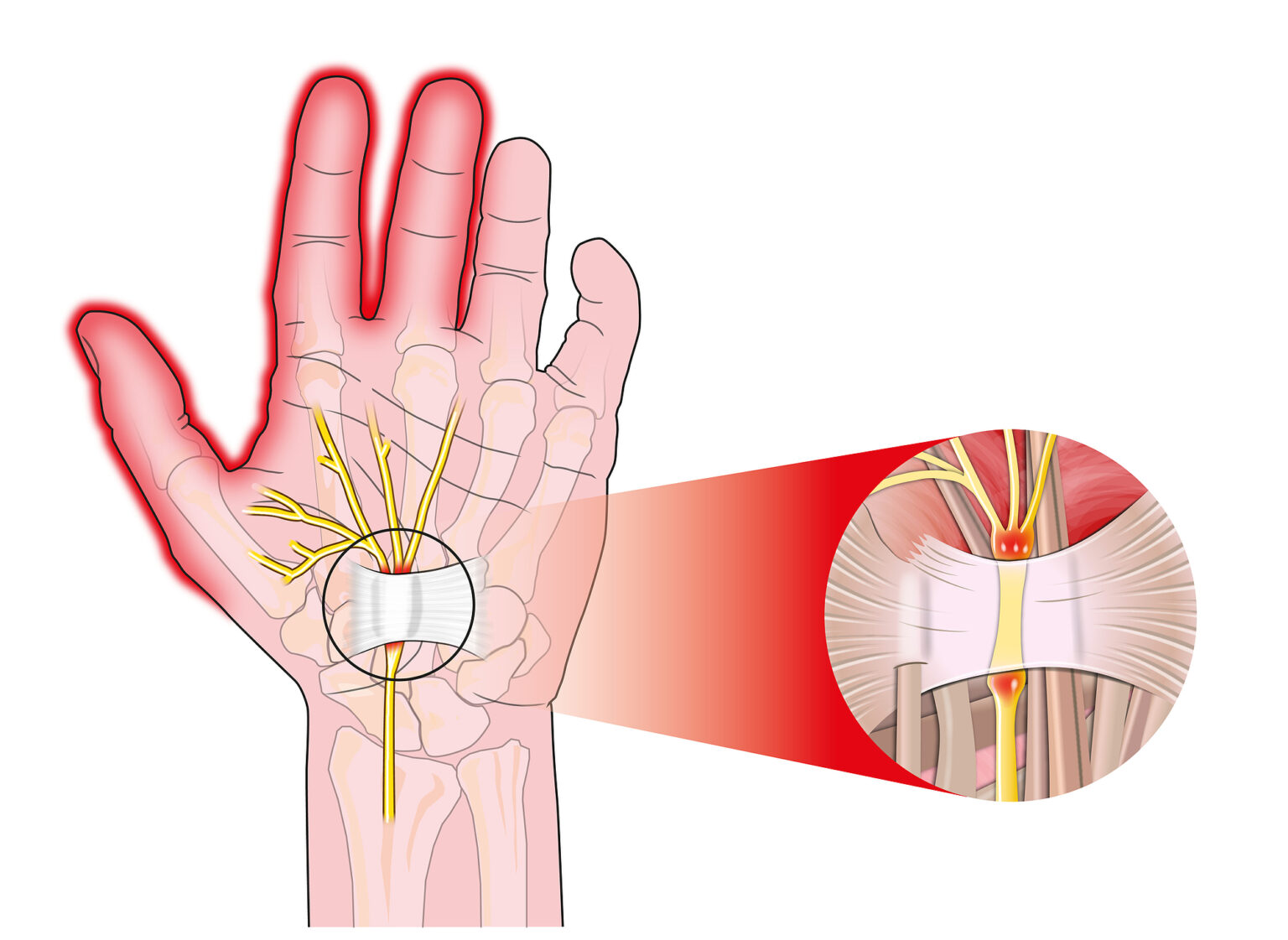
Numbness and pins and needles in the thumb and first three fingers, often worst at night. Mild to moderate cases are usually managed without surgery first, and we will tell you if a medical or surgical opinion is worth getting.
Pain on the outside or inside of the elbow from gripping, twisting and repeated loading. Common in trades, hairdressing and anyone using a mouse all day.
The classic screen-and-keyboard pattern, worse by afternoon and better at weekends. More on neck pain.
Backs hurt on the job, from a single awkward lift or from months of them. More on back pain.
Long hours seated in one position, often with vibration, and usually with a seat set up badly. Common in transport, couriers and sales.
ACC
ACC covers work injuries in two categories. An accident at work is obvious. A gradual process injury — RSI, carpal tunnel, tendinopathy caused by the tasks and environment of your job — is also covered, provided the work is a substantially greater cause than anything outside it. We assess that at your first appointment and lodge the claim for you.
Our article on ACC treatment without a GP referral walks through how a claim works and what each visit costs.
Who treats it
Most work injuries need two things: the painful tissue settled, and the load that caused it changed.
Hands-on treatment of the neck, upper back, forearm and wrist. Wrist and hand symptoms can be linked to the neck and upper back, which is why we assess above the site of pain.
Graded strengthening for the tissue that failed, plus the workstation and technique changes that stop it recurring. This is the part that makes the fix last.
Useful for stubborn forearm, elbow and shoulder pain, and for nerve-related symptoms that have not settled with manual therapy alone.
Releases the forearm, neck and shoulder muscles that hold on after months of the same movement, and keeps you comfortable between treatments.
Is it your work?
The pattern usually gives it away. Work-driven pain follows your roster: worse by Wednesday or Thursday, noticeably better after a long weekend, back within a day or two of returning. Pain that is identical seven days a week is less likely to be about the job.
Get it looked at sooner rather than later. Injuries treated within the first few weeks do better than the same injury left for six months, and an early ACC claim is far simpler than one lodged after the fact.
At your desk
Screen at eye level, elbows near your sides at about a right angle, feet supported, mouse close enough that you are not reaching for it. Most desk pain we see comes down to a screen too low and a mouse too far away.
Breaks beat posture. No position is good for eight hours — stand up, change what you are doing, and give the loaded tissue something different every half hour or so. Our guide to desk posture and back pain goes through the set-up properly.
If it is manual work rather than a desk, the same logic applies to technique and rotation: vary the task, get help with the awkward lifts, and do not let a niggle run for months because it is only a niggle.

Your first visit
Assessment, treatment and the ACC claim, all in the one appointment.
What you do, what changed, and when the pain arrives in your week. This is what decides whether the claim is an accident or a gradual process.
The painful area plus the neck, shoulder and thoracic spine, because forearm and hand symptoms frequently start higher up.
Hands-on treatment that day, and we lodge your ACC claim while you are there if it applies.
Specific, practical adjustments to your set-up or technique, plus two or three exercises rather than a sheet of twenty.
Common questions
Anything else? Call 09 444 3231.
Visiting us
| Monday – Thursday | 7:00am – 7:00pm |
|---|---|
| Friday | 7:00am – 6:00pm |
| Saturday | 10:00am – 5:00pm |
| Sunday | Closed |
| Monday – Friday | 8:00am – 7:00pm |
|---|---|
| Saturday | 10:00am – 5:00pm |
| Sunday | Closed |
Related conditions
Book online at Glenfield or Orewa, or call 09 444 3231 and tell us what you do for work.