
Firm, targeted massage for people who train — to get ready for an event, recover from one, or stop tight muscles turning into an injury.
If you have been looking for sports massage near me, here is the short version: it is massage built around how you train. Your therapist works on the muscles your sport loads the most — calves and hamstrings for runners, shoulders and upper back for swimmers and CrossFit, hips and quads for cyclists — using firmer pressure, stretching and focused work on tight spots.
It is not only for athletes. Anyone who trains regularly, walks a lot or does a physical job can get something from it. The aim is practical: move more freely, recover faster between sessions, and notice small problems before they stop you.
A lighter, quicker session in the days before a race or game to loosen key muscle groups without leaving you sore on the day.
Recovery work one to three days after a race, tournament or big session, when your legs are heavy and stiff.
A session every few weeks through a training block to keep tight areas in check.
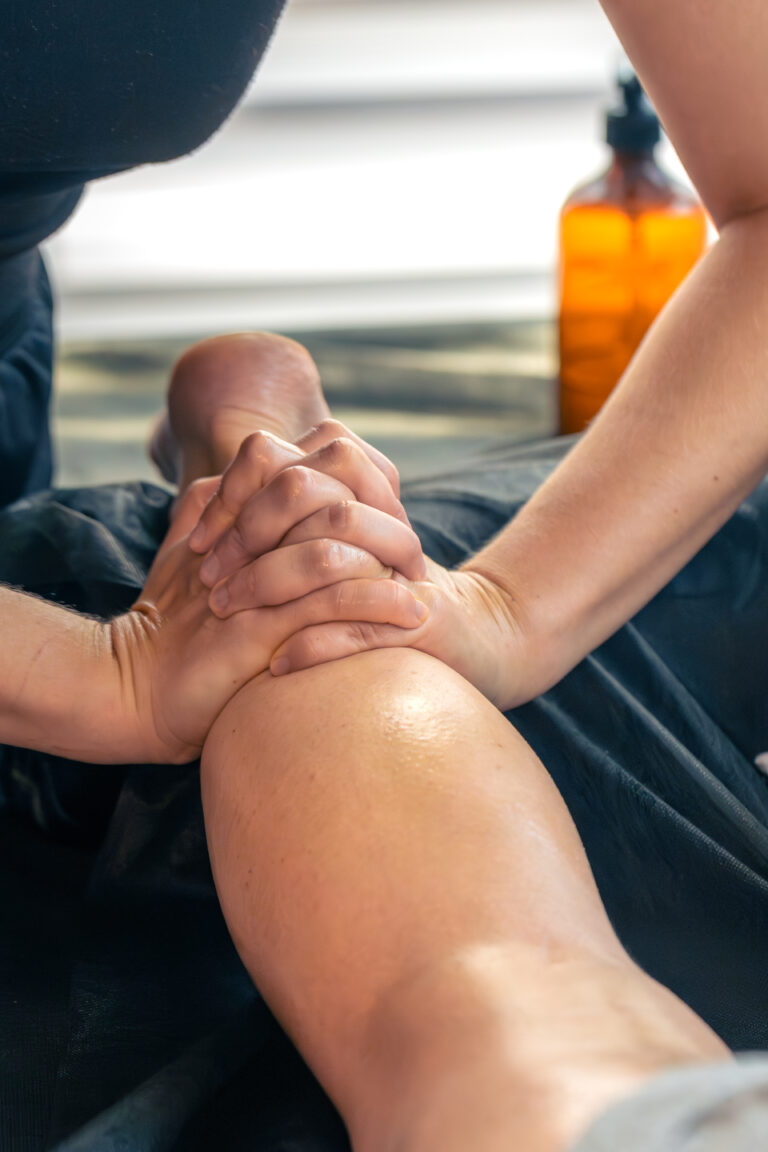
Calf, hamstring, quad, hip flexor and ITB tightness that builds with mileage.
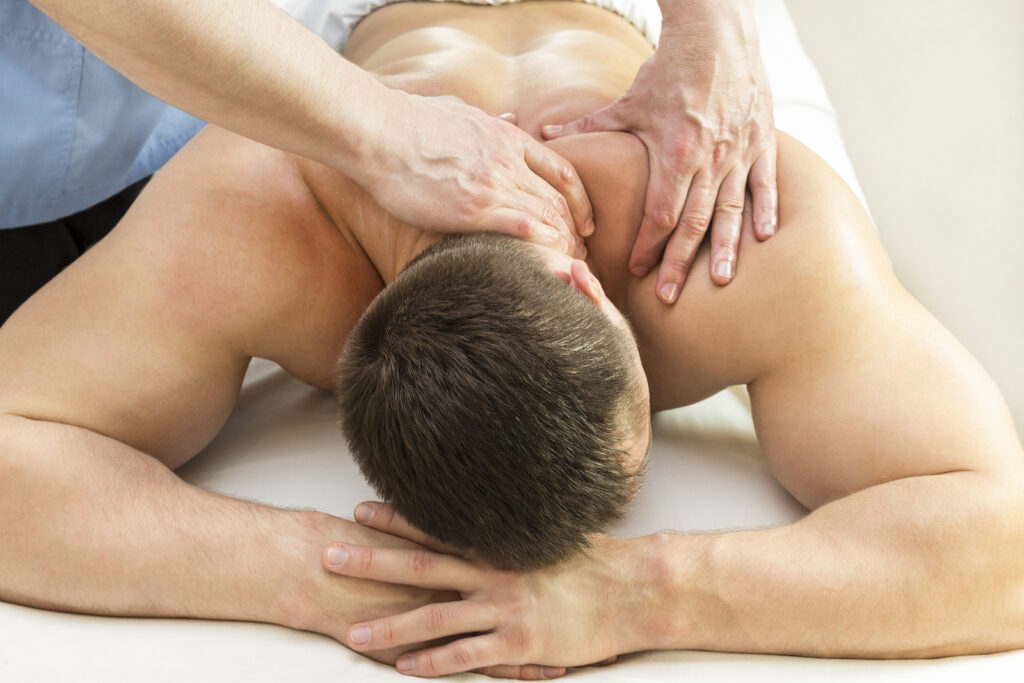
Shoulders, upper back, hips and forearms that tighten under heavy or high-volume training.
Once a physio or osteopath has assessed an injury, massage can support the plan they set.
Sports massage is useful, but it is not the answer to everything.
It will not heal a torn muscle, a stress fracture or a ligament injury. If you have sharp pain, swelling, bruising, pain that is getting worse, or pain that stops you training, see a physio or osteopath first. Both are ACC registered at our clinics and you do not need a GP referral.
Firmer is not always better. The right pressure depends on where you are in your training. Deep work the day before an event can leave you flat, which is why pre-event sessions are lighter and shorter.
Expect some tenderness for a day or two after a firm session, a bit like after a hard workout. If anything feels sharp during treatment, say so and your therapist will change what they are doing.
We start with a few questions: what you train, what is coming up, and where you feel tight or sore.
Your therapist then works on the areas that matter for your sport, using a mix of deep strokes, trigger point work and stretching. You stay in control of the pressure throughout, and you can ask for lighter or firmer at any time.
Sessions run 30, 45, 60 or 90 minutes. Thirty minutes suits one focused area, such as calves before a race; an hour covers the full lower or upper body. Prices are on our prices page. Drink water afterwards and keep the next day’s training easy if you had a firm session.
Sports massage at our Glenfield and Orewa clinics
Glenfield & Orewa
Glenfield & Orewa
Osteopath, Manual Therapist & Massage Therapist
Orewa
Injured in an accident?
ACC does not fund massage therapists, but it does fund registered osteopaths. If your pain started with an accident, our osteopath Akiko Nobuhara can treat you under ACC. Her sessions are a combination of osteopathy, massage therapy and manual therapy, given by a registered osteopath, so ACC can cover them. No GP referral needed.
ACC does not fund massage therapists, but our osteopath Akiko offers ACC massage for accident injuries: $65 for 45 minutes. If your pain started with an accident or injury, an ACC-registered physio or osteopath can see you under ACC, with no GP referral needed. We are a Southern Cross Easy-Claim provider for massage and claim at the time of payment, subject to your policy. Afterpay is available over four fortnightly payments, and we also accept cash, EFTPOS, Visa and Mastercard. Prices are on our prices page.
Google reviews
Available at both clinics, six days a week including Saturdays. No referral needed. Book online any time, or call and we will find you the earliest slot.